The Eden Project (and how environmental education should be fun as well as valuable!)

The Eden Project is not just a famous attraction in Cornwall, but one of the most iconic tourist destinations in the UK.

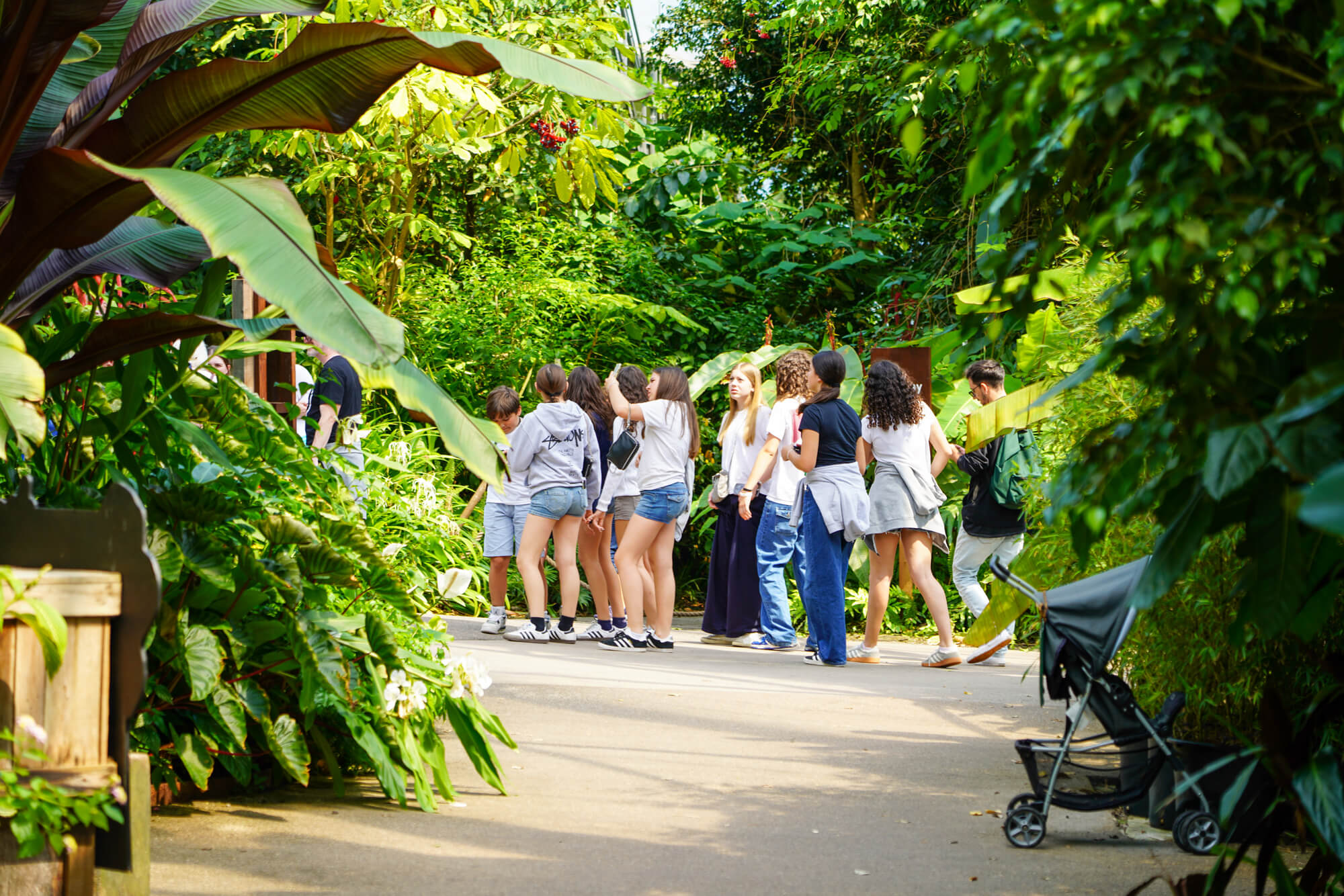
Five teenagers with backpacks stand closely together, looking at plants in a lush garden at the Eden Project, with curved pathways and large domed greenhouses in the background. The scene is bright and summery.

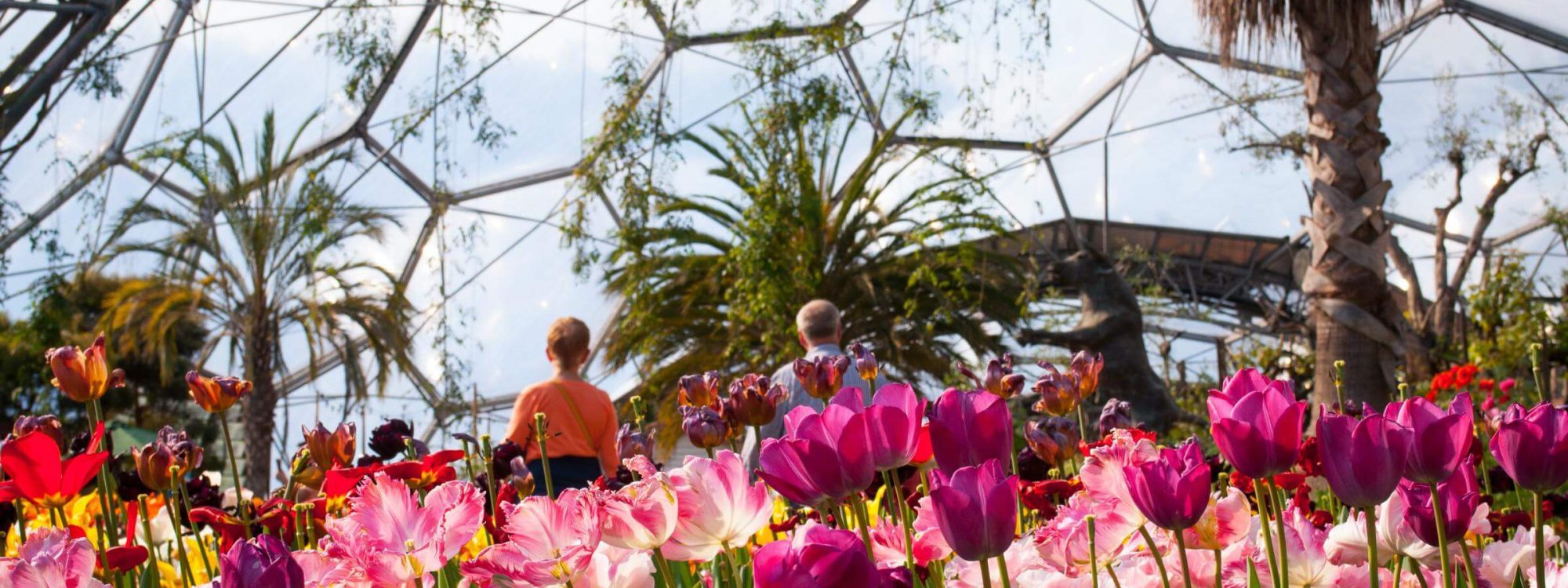
Opened in 2001, the world had never seen this sort of construction before. It was billed as the biggest greenhouse in the world. Even today, it is still home to the world’s largest indoor rainforest. In fact, you could fit the Tower of London inside the Rainforest Biome!

Beyond its sheer size, Eden has become a global leader in conservation, education, and biodiversity. As our world faces increasing environmental challenges, places like the Eden Project are vital organisations where we can share knowledge and inspire the creativity to find solutions and adaptations to climate change.

“It was ridiculous to imagine it was possible and that hundreds of people trained to say no could be persuaded to say yes.”

Tim Smit, co-founder of the Eden Project

Our favourite facts about Eden

    • The Eden Project is home to over 1,000 plant species and 2 million plants in total, plus birds, lizards, and insects.

    • The biomes and gardens take up a space equivalent to 35 football pitches.

    • The Eden Project uses around 30,000 litres of water per day. However, what’s even more remarkable is that over two-thirds of that is recycled rainwater.

    • Eden is home to some of the weirdest plants in the world. One of the most famous being the Titan Arum. And why is this plant so special?
        • There are less than 1,000 titan arums in the whole world.

        • It takes years to grow but only blooms for 2 days. When it does bloom, it doesn’t smell like perfume either… titan arums are famous for their powerful smell of rotting flesh. Because of this, it’s often called the ‘corpse flower’. Yuk!

        • This stinky plant is the largest of its type and it even produces heat as it grows. The dedicated team at Eden had to pollinate it using paintbrushes on long sticks, dipped in pollen.

        • The titan arum at Eden once grew to 291cm—only 19cm off of the world record!

There are too many amazing facts to list and we love learning more with our students on every new visit.

A summer school student appreciating the waterfall at Eden.

Behind this vision is a dedicated team… made up of people who wanted to change something, who wanted to be able to say, ‘I’m glad I did,’ rather than, ‘I wish I had.’

from the Eden Project’s website

The origins of the Eden Project

Students enjoying the tropical biome at the Eden Project

“What makes Eden such a great classroom is that you’re immersed in the thing you are learning about. You can see, hear, feel, smell and even taste it.”

Robbie Kirkman, Eden Schools Education Lead

Junior students in a classroom at the Eden Project.

Immersive learning at Eden

Education is at the core of Eden’s mission—which is why we value our trips there so highly! Much like us, the team at Eden believes that learning extends far beyond the classroom.

Eden offers the chance for our students to immerse themselves in hands-on learning experiences. We’ve even been lucky enough to attend some of their fantastic educational workshops.

Whether it’s exploring the biomes or participating in workshops, students can practise their English, while deepening their engagement with environmental topics.

The best things to see and do at Eden

There’s so much to see and do at the Eden Project. We thought we should give you a rundown of some of the best bits…

    • Witness a breathing sculpture blowing smoke rings. We aren’t talking total nonsense—there really is a sculpture in Eden’s Invisible Worlds exhibition that puffs out rings of vapour. It’s one of the largest ceramic sculptures in the world and represents one of the world’s smallest organisms: cyanobacteria. It’s quite a sight to behold!

    • Spot some wildlife. With such an array of plantlife, the biomes make the perfect home for many birds and lizards, too. Brightly coloured roul-roul partridges hop along the ground, guarding their nests. Above, blackbirds flit about, feasting on the bugs and fruit within the foliage. You need keen eyes to spot the speedy lizards though!

    • Seek out fruits and flowers. Have you ever seen how a cashew looks as it’s growing? How about cocoa pods? From giant Santa Cruz lilypads (which can grow up to 2 metres wide!) to rare and delicate orchids, the display of flora is jaw-dropping—even for those of us who are not green-fingered.

    • Climb up into the canopy. To really get a sense of the Rainforest Biome, you can climb all the way up to the canopy walkway and look across the treetops. But if you don’t like heights, this might not be your cup of tea.

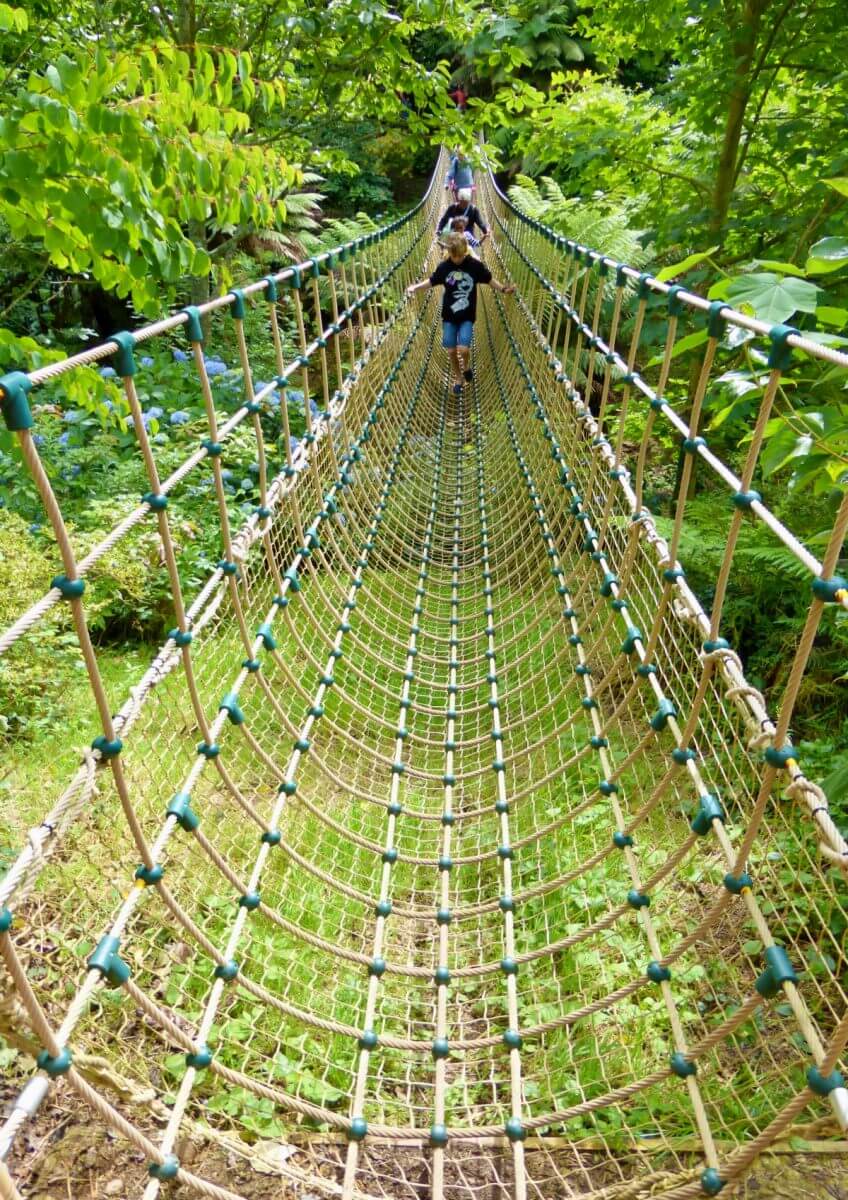
    • Cross rope bridges and watch waterfalls. The Rainforest Biome is the perfect place to channel your inner Indiana Jones. When you stumble across their authentic Malaysian house at its centre, you really feel like you’ve been whisked away to an entirely different landscape.

    • For those seeking thrills and an unbeatable view of the Eden Project, you can even zipline over it!

The list could go on and on. With so much to see and do, Eden offers unforgettable experiences for all ages. Every trip reminds us that we’re lucky to have such an amazing place right on our doorstep!

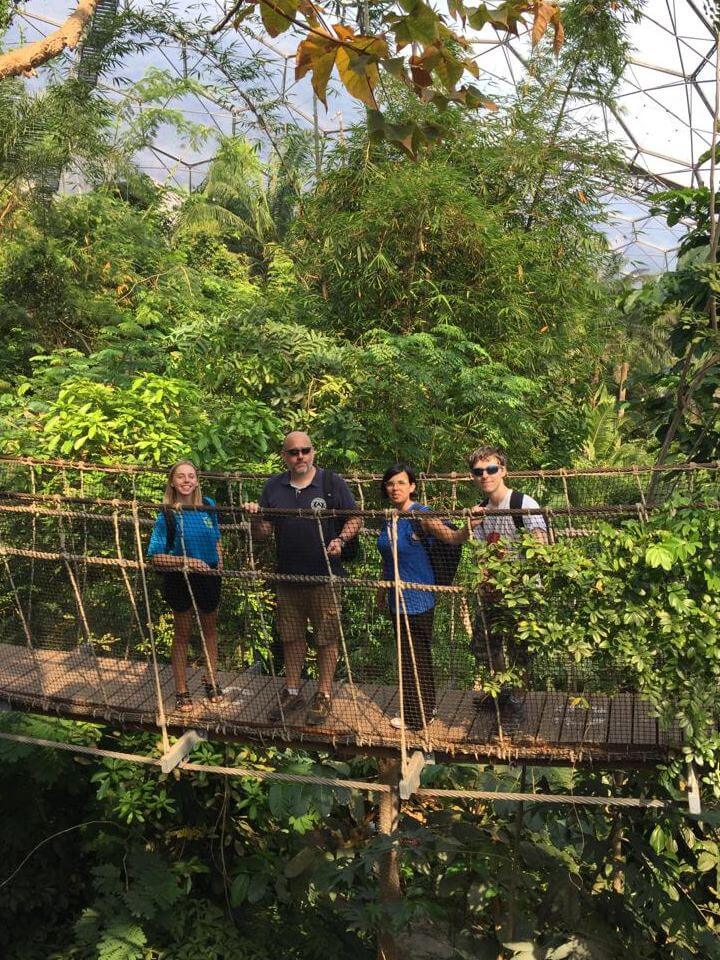
Language Tree staff and students on the rope bridge at Eden.
Junior Summer School students at the Eden Project.

Eden’s commitment to a sustainable future

Eden is a pioneer in creating a tourist attraction that is focused on leading a discussion around sustainability, biodiversity and how we manage climate change.

From 2012 to 2020, Eden reduced its carbon emissions by 35%, with the aim to become climate positive by 2030. In order to achieve this, the team at Eden takes a multifaceted approach. They’ve invested in electric vehicles across the site, renewable-powered charging hubs for visitors’ cars, and they’ve even installed a geothermal power plant on-site in order to heat the Biomes.

Eden’s approach is an inspiring blueprint for a more sustainable future. As you soak up the incredible biodiversity of the project, it becomes all the more apparent how important these changes are.

Learn more about Eden’s journey to becoming climate positive here.

Get in touch to find out more about studying with us:

Click here

Beyond Eden: The Lost Gardens of Heligan and more

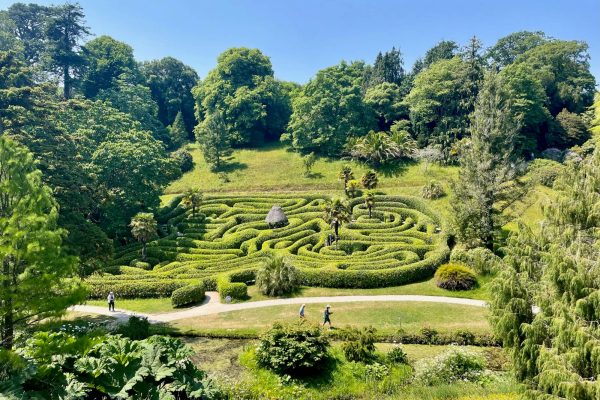
In addition to the Eden Project, co-founder Tim Smit led the restoration of The Lost Gardens of Heligan—only 15 kilometres up the road from Eden!

Reopened in 1990, Heligan is one of Europe’s most celebrated garden restoration projects. This stunning estate, abandoned after World War I, was brought back to life by Smit and his team.

This synergy between the Eden Project and the many other sub-tropical gardens around Cornwall is perhaps key to how & why the Eden Project has been embraced so wholeheartedly by the people of Cornwall.

Read more about the Great Gardens of Cornwall in our blog
The jungle, Heligan.

If it’s gardens you love, then there are few places in the world better to visit than Cornwall.

Perhaps, you’d like to join one of our Language Experiences and experience more of Cornwall’s incredible gardens?

Read stories from our archived news articles...

View Archived News

Want to start your summer language experience?

Enquire Now
Language Tree logo in white.